Imagine spending months building your online store, investing in products, running ads, and then watching potential customers leave without buying anything. This is the reality for thousands of e-commerce business owners across the UAE and around the world. The truth is, most online stores do not fail because of bad products. They fail because of small, avoidable mistakes that quietly destroy the customer experience and hurt sales.
Whether you are just starting your online shop or you have been selling online for years, understanding the most common e-commerce mistakes can be the difference between a store that thrives and one that struggles. In 2024, global e-commerce sales crossed 6.3 trillion US dollars, and competition has never been stronger. If your online store is not converting visitors into buyers, something is going wrong behind the scenes.
This guide walks you through the top 10 e-commerce mistakes that online sellers make, why they happen, and most importantly, how to fix them. Read this before your competitors do, especially if you are planning to scale your business with professional Shopify Store Development Services in UAE to stay ahead in a highly competitive market.
1. Poor Website Speed and Performance
One of the biggest e-commerce errors that business owners overlook is a slow-loading website. Research from Google shows that 53 percent of mobile users leave a page if it takes more than three seconds to load. In the UAE, where mobile commerce is growing rapidly, a slow website is a silent sales killer.
Slow load times are often caused by unoptimised images, too many third-party plugins, poor web hosting, or bloated code. These technical problems directly affect your conversion rate, bounce rate, and even your Google search ranking.
What to do: Compress your images using tools like TinyPNG, choose a reliable hosting provider, and run your site through Google PageSpeed Insights regularly. Speed is not just a technical issue. It is a customer experience issue.
2. Complicated Checkout Process
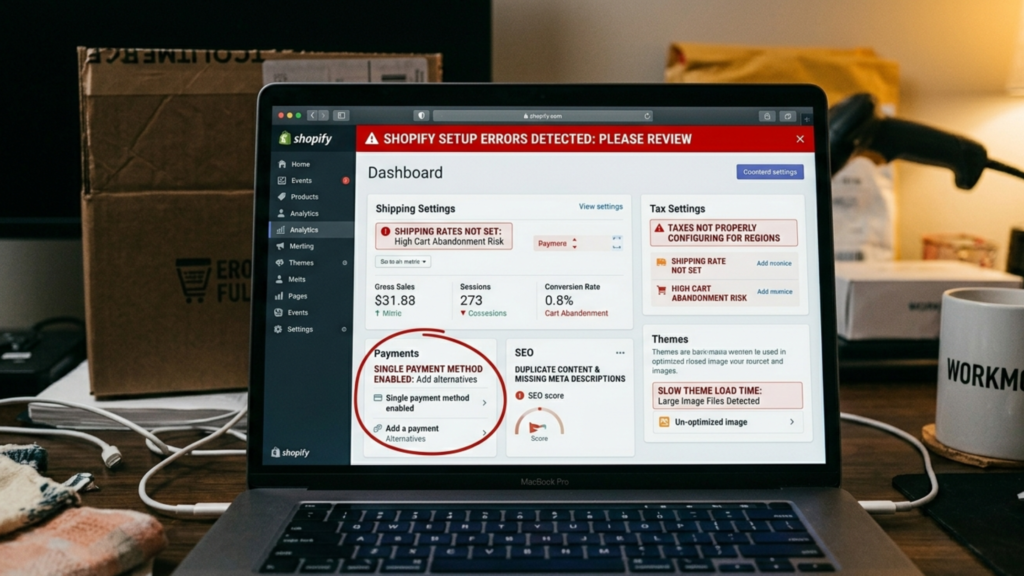
A long or confusing checkout process is one of the leading causes of cart abandonment in online retail. Studies show that the average cart abandonment rate in e-commerce is around 70 percent. That means 7 out of 10 people who add something to their cart leave without completing the purchase.
Forcing customers to create an account before buying, asking for too much personal information, or offering limited payment options all contribute to this problem. In the UAE, customers expect fast, simple, and secure digital payments, including options like Apple Pay, Google Pay, and local payment gateways.
What to do: Offer guest checkout, reduce the number of form fields, display trust badges and SSL certificates clearly, and provide multiple payment options. Make the path from cart to confirmation as short as possible.
3. Weak Product Descriptions and Poor Quality Images
When someone shops online, they cannot touch or try the product. Your product page is doing all the selling for you. Thin product descriptions that only list basic features, or low-resolution images that do not show the product clearly, will push buyers away.
Effective product content uses descriptive, benefit-driven language. It answers questions before the customer even asks them. Good product photography, including multiple angles and lifestyle images, increases purchase confidence and reduces return rates.
What to do: Write product descriptions that speak to customer needs. Use NLP-friendly language that describes size, material, use case, and benefits. Include high-quality images and, where possible, short product videos.
4. Ignoring Mobile Optimization
More than 60 percent of e-commerce traffic now comes from mobile devices, and in the UAE, that share is even higher due to high smartphone penetration. If your online store is not fully optimized for mobile users, you are losing a massive portion of potential revenue.
Mobile optimization goes beyond making your site look good on a smaller screen. It includes touch-friendly navigation, fast load times on mobile networks, and a checkout flow designed for thumbs, not mouse clicks.
What to do: Use a responsive design that adjusts to all screen sizes. Test your store on multiple devices regularly. Use Google’s Mobile-Friendly Test to check where you stand.
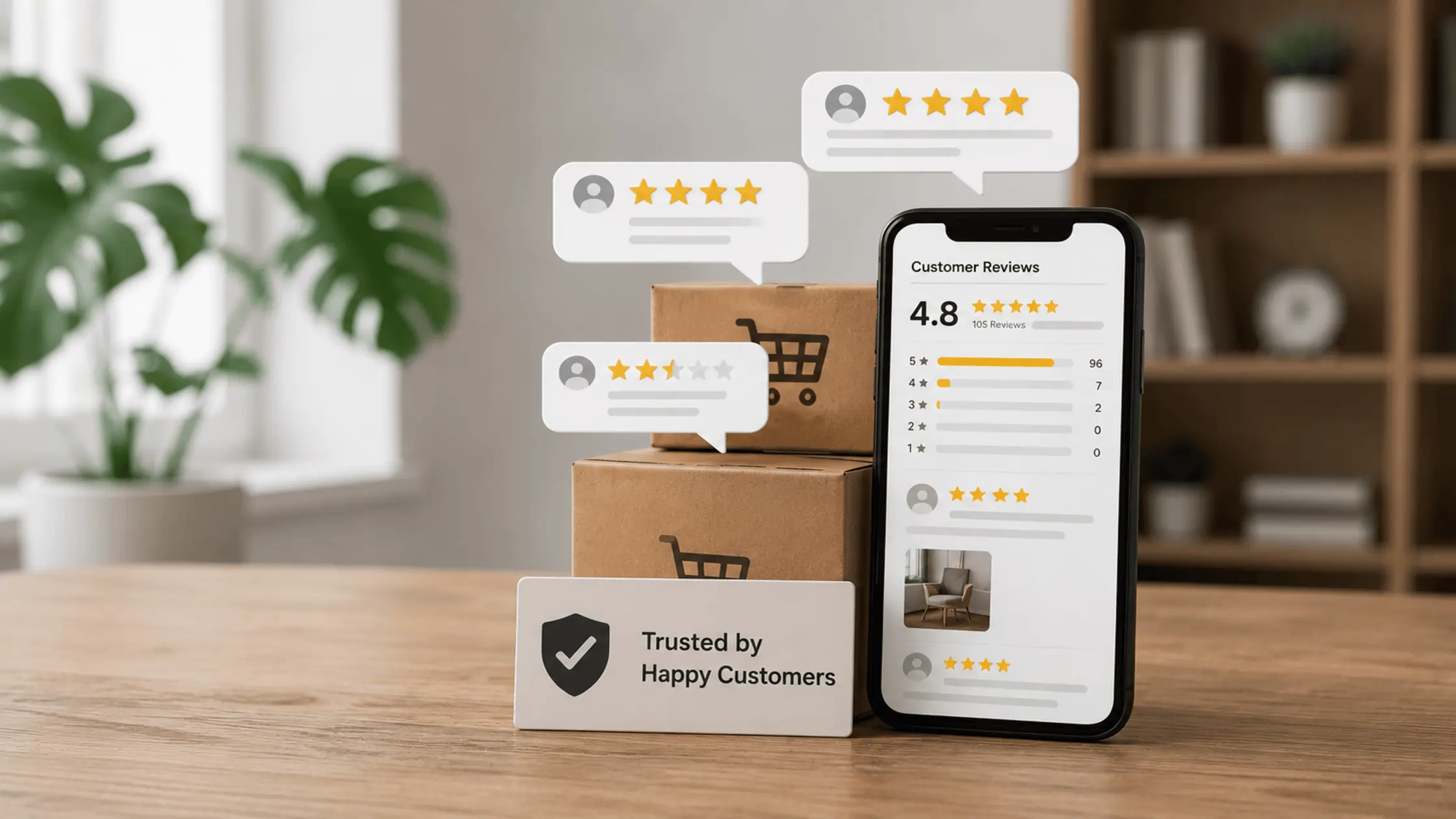
5. Lack of Customer Trust Signals
Would you hand over your credit card details to a website you do not trust? Neither would your customers. Many e-commerce stores, especially new ones, fail to build trust, leading to high exit rates on product and checkout pages.
Trust signals include SSL certificates (the padlock icon in the browser), customer reviews and ratings, clear return policies, visible contact information, and recognisable payment logos. Without these, even a well-designed store can feel risky to buyers.
What to do: Display verified customer reviews prominently. Add a clear and simple return and refund policy. Make it easy for customers to contact you. Show security badges near your payment fields.
6. No Clear SEO Strategy for Your Online Store
Many e-commerce business owners focus entirely on paid advertising and forget about organic search. Without a solid search engine optimization strategy, your product pages will never appear in Google search results for the terms your potential customers are actually searching.
E-commerce SEO involves keyword research for product and category pages, writing unique meta titles and descriptions, building internal links, and earning backlinks. It also includes structured data markup that helps Google understand your products and display them in rich results and AI Overview snippets.
What to do: Research what your customers search for and use those terms naturally in your product titles, descriptions, and category pages. Avoid duplicate content, which is a very common mistake in online stores that use manufacturer descriptions without editing them.
7. Overlooking Email Marketing and Customer Retention
Acquiring a new customer costs five times more than keeping an existing one. Yet many e-commerce businesses put all their energy into attracting new visitors and do nothing to retain the buyers they already have.
Email marketing remains one of the highest-return digital marketing channels available. Automated email flows for cart abandonment, post-purchase follow-ups, and loyalty offers can significantly increase repeat purchase rates and lifetime customer value.
What to do: Build your email list from day one. Set up automated flows using tools like Klaviyo or Mailchimp. Send personalized recommendations based on past purchases and segment your audience for better relevance.
8. Selling Without a Defined Target Audience
Trying to sell to everyone is the same as selling to no one. One of the most fundamental e-commerce strategy mistakes is launching a store without a clear understanding of who the ideal customer is, what they want, and where they spend their time online.
Without audience clarity, your product selection, your messaging, your ad targeting, and your content will all miss the mark. This leads to wasted marketing spend and poor conversion rates.
What to do: Build a detailed customer persona. Understand the demographics, interests, pain points, and buying behaviour of your ideal buyer. Every decision in your store, from design to product descriptions, should speak directly to that person.
9. Not Analyzing Data and Store Analytics
Running an online store without checking your data is like driving with your eyes closed. Many e-commerce owners skip Google Analytics or avoid looking at their numbers because it feels overwhelming. This means they keep making the same mistakes without knowing it.
Important metrics to track include conversion rate, average order value, bounce rate, traffic sources, and customer acquisition cost. These numbers tell you what is working and what is not. They help you make smarter decisions about where to invest your time and money.
What to do: Set up Google Analytics 4 and connect it to your store. Review your data weekly. Use heatmaps and session recordings through tools like Hotjar to see exactly how customers behave on your site.
10. Ignoring Post-Purchase Experience
The sale is not the end of the customer journey. It is the beginning of a relationship. Many e-commerce businesses focus entirely on getting the sale and then disappear, leaving customers with no communication, no updates, and no reason to return.
A poor post-purchase experience leads to bad reviews, high return rates, and zero repeat business. A great one turns a first-time buyer into a loyal customer and brand advocate.
What to do: Send a clear order confirmation with tracking information. Follow up after delivery to check satisfaction. Make returns easy and hassle-free. Ask for reviews at the right moment. A simple thank-you email goes a long way.
Frequently Asked Questions
Q: What is the most common mistake in e-commerce?
A: The most common mistake is a complicated checkout process that causes cart abandonment.
Q: How do I improve my e-commerce conversion rate?
A: Focus on website speed, clear product pages, trust signals, mobile optimisation, and a streamlined checkout.
Q: Is SEO important for online stores?
A: Yes, absolutely. E-commerce SEO helps your products appear in organic search results without paying for every click.
Q: How often should I review my store’s analytics?
A: Ideally, review your key metrics at least once a week. Monthly deep dives help you spot trends and plan improvements.
Q: What trust signals matter most in e-commerce?
A: Customer reviews, visible return policies, secure payment indicators, and easy-to-find contact details are the most important trust signals for online shoppers.
Final Thoughts
Building a successful online store in today’s competitive digital landscape takes more than a great product. It requires attention to the details that most sellers overlook, from site speed and mobile experience to post-purchase communication and data analysis. The good news is that every mistake on this list is fixable.
If you are running an online business in the UAE and want to make sure your e-commerce store is set up for real, sustainable growth, working with a knowledgeable digital partner can help you identify where the gaps are and build a smarter path forward.Qudrat Digital helps businesses across the UAE, including Dubai, Abu Dhabi, Sharjah, and beyond, build stronger, better-performing online stores. If your store is ready for its next level, a conversation with the right team could be the first step.