The UAE has always been ahead of the curve when it comes to technology adoption. From smart cities in Dubai to digital government services in Abu Dhabi, the country treats innovation not as a luxury but as a national priority. And now, that same forward-thinking energy is reshaping how students learn, how teachers teach, and how educational institutions operate from the ground up.
If you are a parent watching your child struggle with one-size-fits-all textbooks, or a school administrator trying to keep students engaged in an age of short attention spans, you already feel the gap. Traditional education methods were built for a different era. AI-powered education apps are here to close that gap, and in the UAE, this shift is happening faster than almost anywhere else in the world.
Why Traditional Learning Is No Longer Enough
Think about the average classroom. One teacher, thirty students, and a single pace for everyone. A student who grasps concepts quickly gets bored. A student who needs more time feels left behind. Neither outcome is acceptable, especially in a country that has staked its Vision 2031 on knowledge-based economic growth.
The pain points are real and widely felt. Students in Dubai, Abu Dhabi, Sharjah, and across the Northern Emirates report that standardized lessons rarely feel relevant to their personal goals. Teachers are stretched thin trying to personalize lessons at scale. Parents spend money on private tutoring to fill in the gaps that classroom instruction leaves open.
This is exactly where AI education app development enters the picture and starts solving problems that have existed for decades.
What AI Education App Development Actually Means
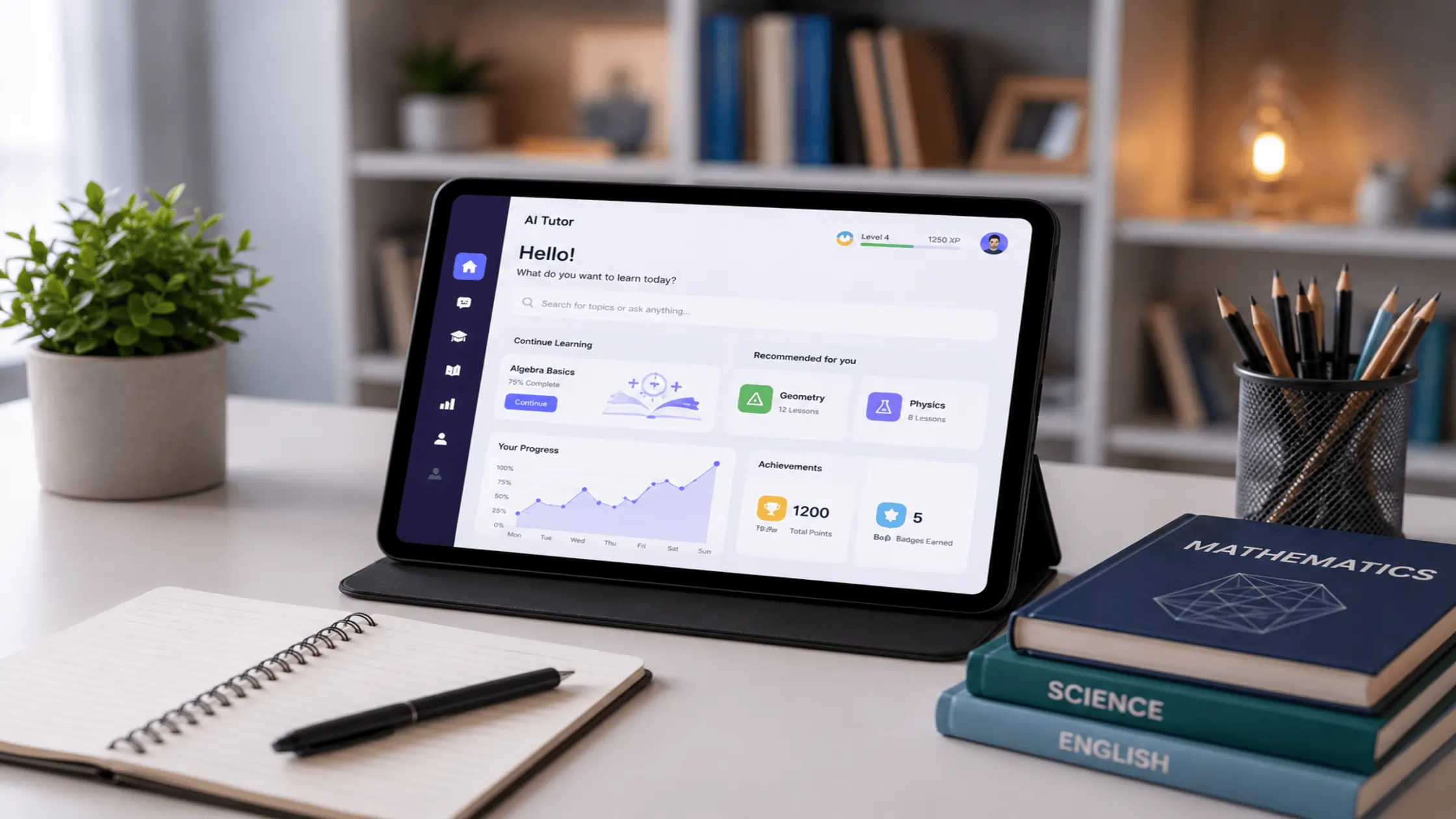
AI education app development is the process of building digital learning platforms that use artificial intelligence to adapt, respond, and evolve based on each learner’s needs. These are not simple quiz apps or digital textbooks. They are intelligent systems that can understand how a student learns, predict where they might struggle, and adjust content delivery in real time. Many organisations are also integrating these solutions with AI automation services for businesses in UAE to improve educational workflows, student engagement, and operational efficiency.
Key technologies that power these apps include machine learning algorithms, natural language processing, computer vision, speech recognition, and adaptive learning engines. When these technologies come together inside a well-designed mobile or web application, the result is a learning experience that feels almost like having a personal tutor available around the clock.
In the UAE context, this development work must also account for multilingual support (Arabic and English), cultural sensitivity, and alignment with the Ministry of Education curriculum guidelines.
How AI Apps Are Transforming Learning Experiences in the UAE
Personalized Learning Paths That Actually Work
One of the most significant breakthroughs in AI-powered education is personalized learning. When a student opens an AI education app, the system starts learning about that student immediately. It tracks which topics they find easy, where they slow down, how long they spend on each question, and what type of content (video, text, interactive exercises) they respond to best.
Over time, the app builds a learning profile unique to that individual. It then delivers content in the sequence and format most likely to produce understanding and retention. A student in Ajman studying mathematics no longer has to follow the same path as a student in Dubai. The app meets each learner where they are.
Research from McKinsey and RAND Corporation has consistently shown that personalized learning can improve academic outcomes by 30 percent or more when implemented correctly. AI education apps bring this personalization to scale.
Real-Time Feedback and Assessment
Traditional homework gets marked days later. By then, the student has usually moved on, and the feedback arrives too late to correct a misunderstanding before it becomes a habit.
AI-powered apps provide instant feedback. The moment a student submits an answer or completes an exercise, the system analyzes the response, identifies the error pattern, and offers a targeted explanation. This feedback loop dramatically reduces the time between mistake and correction, which is a critical factor in effective learning.
For students in UAE schools preparing for standardized assessments, this kind of real-time diagnostic is invaluable.
Gamification and Engagement Features
Engagement is perhaps the biggest challenge in modern education. Students today are competing with social media, streaming platforms, and video games for attention. AI education apps address this by incorporating gamification elements such as reward systems, learning streaks, leaderboard challenges, and interactive storytelling.
These features are not just entertainment. They trigger dopamine responses in the brain that associate learning with positive emotion, making students more likely to return to the app voluntarily and spend more time in productive study.
Schools in Ras Al Khaimah and Fujairah that have piloted gamified learning platforms have reported significantly higher homework completion rates and improved classroom participation.
AI Tutoring and Conversational Learning
Modern AI tutors powered by large language models can now hold meaningful educational conversations with students. A student can type or speak a question in Arabic or English, and the AI tutor responds with a clear, age-appropriate explanation. The student can ask follow-up questions, request examples, or ask the AI to explain the concept in a different way.
This conversational learning model removes the fear of asking a “dumb question” in front of classmates. Students learn more freely when they feel psychologically safe, and AI tutors create that environment consistently.
Data-Driven Insights for Teachers and Parents
The intelligence in AI education apps does not only benefit students. Teachers gain access to detailed dashboards showing class-wide and individual performance data. They can see which concepts the whole class is struggling with, which students are at risk of falling behind, and which areas are ready for acceleration.
Parents in Abu Dhabi and Dubai can monitor their child’s progress in real time, receiving weekly reports and alerts when intervention may be needed. This transparency builds trust and allows families to support learning at home in a more informed and effective way.
The UAE’s Growing Appetite for EdTech Investment
The UAE government has made clear that education technology is a strategic priority. The country allocated over AED 1.3 billion to digital education infrastructure in the years following the pandemic, and that investment continues to grow. Initiatives like the Mohammed bin Rashid Smart Learning Programme and ADEK’s digital strategy in Abu Dhabi have created fertile ground for AI education apps to flourish.
Startups and established tech companies across Dubai Internet City, Dubai Silicon Oasis, and Abu Dhabi’s Hub71 are investing heavily in building the next generation of EdTech platforms for both the UAE market and the broader MENA region.
The demand from schools, universities, corporate training programs, and individual learners is rising sharply. Parents are actively searching for apps that give their children a competitive advantage. Institutions are looking for solutions that help them meet performance benchmarks set by national and international education rankings.
Features That Make an AI Education App Genuinely Effective
Not every app calling itself AI-powered delivers real results. If you are evaluating platforms for your school, your child, or your organization, look for these markers of quality.
A high-quality platform should offer adaptive content delivery that changes according to student behavior, learning speed, and performance patterns, rather than relying on passive content consumption. Many advanced platforms now use Personalized AI Models to create more customized learning journeys that match the strengths and challenges of individual students.
Natural language processing capabilities that support both Arabic and English are essential for the UAE market. The platform should also include accessibility features for students with different learning needs, including dyslexia support, text-to-speech functionality, and adjustable reading levels.
Strong data privacy practices matter enormously when working with minors. Look for compliance with UAE data protection regulations and transparent policies about how student data is used and stored.
Common Questions About AI Education Apps in the UAE
Q: Are AI education apps suitable for all age groups?
A: Yes. These apps adapt content and complexity for learners from kindergarten through university and professional training.
Q: Can AI replace teachers?
A: No. AI handles practice, tracking, and personalization so teachers can focus on mentorship, creativity, and critical thinking.
Q: Do these apps support Arabic and the UAE curriculum?
A: Yes. Quality platforms include full Arabic language support and alignment with Ministry of Education standards.
Q: Do AI apps actually improve results?
A: Yes. The World Economic Forum found that students using adaptive AI tools showed stronger performance gains than peers using traditional methods.
Q: How much does AI education app development cost in the UAE?
A: Costs vary by features and complexity. Partnering with an experienced local team ensures your budget is spent efficiently.
The Road Ahead for AI-Powered Learning in the UAE
The trajectory is unmistakable. By 2030, AI education technology is projected to become a multi-billion-dollar industry globally, and the UAE is positioning itself as one of the leading markets and creators in this space.
Emerging developments to watch include AI systems that can detect emotional states through facial expression analysis and adapt lesson difficulty or pacing in response to student stress or fatigue. Augmented reality learning environments are also entering the classroom, allowing students in Sharjah and Umm Al Quwain to conduct virtual science experiments or take immersive historical tours as part of their curriculum.
For businesses, schools, and entrepreneurs looking to be part of this transformation, now is the ideal moment to invest in AI education app development. The technology is mature enough to deliver real results, the regulatory environment in the UAE is supportive, and the demand from learners and institutions has never been higher.
If you are ready to build a platform that genuinely changes how people learn, working with an experienced regional partner makes all the difference. Qudrat Digital specializes in AI and app development solutions tailored for the UAE market, helping clients across Dubai, Abu Dhabi, Sharjah, Ajman, Ras Al Khaimah, Fujairah, and Umm Al Quwain bring intelligent, culturally aligned education solutions to life.