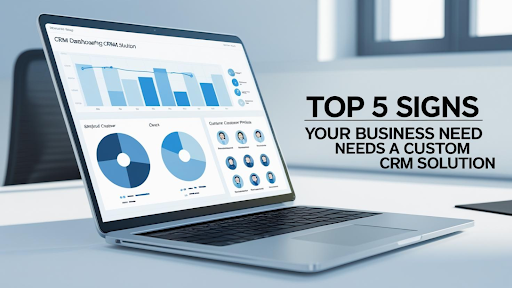
In this busy business environment, customer relationship management techniques can either be the key to your success or failure. Most organizations are not organized and have no visibility into customer data, which slows growth and frustrates teams. As your business grows, so do your unique needs, which off-the-shelf software can rarely keep up with, creating efficiencies and opportunities that you lose. That is why some companies resort to one of the most reliable CRM Development services to create solutions that would perfectly suit their specific needs, the ones that would evolve with the business and simplify the working process. When such issues arise, a custom CRM system developed specifically on the trip of your company may be an alternative to explore.
What Makes a Customized System Different?
Custom CRM systems differ fundamentally from generic software by offering businesses the ability to design workflows and customer journeys based on their unique structure and processes. Instead of forcing teams to adapt to a rigid set of features, companies get platforms built around their operations, making it easier for employees to adopt and use the tool effectively. This tailored approach improves productivity and ensures that the CRM evolves alongside the business, supporting both current and future needs.
Core Elements That Set Custom Solutions Apart
- Flexible dashboards: Customizable views allow each user to focus on the most relevant data for their role, enhancing efficiency and decision-making.
- Process-based automation: Automating repetitive, business-specific tasks streamlines operations and reduces human error.
- Integration with existing tools: Seamless connections with software already in use — from accounting to email marketing — keep workflows smooth and data synchronized.
Sign 1 – Customer Data Is Disorganized
One of the earliest signs your business could benefit from a custom CRM solution is when customer data is scattered across multiple tools or spreadsheets. This fragmentation means employees spend excessive time searching for information or entering duplicate records. Without a consolidated view, mistakes multiply, and important follow-ups slip through the cracks. Centralizing data with a system built to your needs is the first step toward reclaiming productivity and delivering better customer experiences.
Problems That Stem from Siloed Information
- Duplicated records lead to wasted efforts and confusion in communication.
- Inaccurate analytics from incomplete data make forecasting and strategy unreliable.
- Delayed response times frustrate customers and decrease conversion rates.
For example, a sales representative might not know that a customer has already contacted support recently, resulting in redundant outreach or conflicting messages. Custom CRMs eliminate these gaps by ensuring all customer touchpoints live in one accessible, real-time platform.
Sign 2 – Teams Aren’t Working in Sync
Disjointed sales, marketing, and customer service teams cause operational inefficiencies and inconsistent customer journeys. Without synchronized communication and shared insights, leads can be lost or mishandled. Custom CRM solutions create unified workflows that connect departments, so each team sees the full picture and can act promptly.
How Streamlined Processes Improve Outcomes
- Faster lead nurturing: Automated handoffs and notifications help keep prospects engaged at every stage.
- Better targeting: Marketing campaigns benefit from sales data to tailor messaging effectively.
- Unified reporting: Consolidated metrics provide clear visibility into overall performance and areas for improvement.
Imagine marketing launching a campaign unaware of sales feedback on certain leads. With a custom system, this disconnect disappears, empowering teams to work collaboratively toward shared goals.
Sign 3 – Tracking Interactions Is a Challenge
A clear history of customer interactions is vital for improving service and identifying growth opportunities. Without easy access to communication logs, businesses risk missing vital context when reaching out, resulting in generic messages and lower satisfaction. Custom CRMs centralize tracking of emails, calls, meetings, and support tickets in one place, giving teams the data they need to personalize every interaction.
Benefits of Centralized Communication History
- Smarter outreach: Sales and support teams can tailor their messages based on prior conversations and preferences.
- Better retention: Customers feel valued when their history is recognized and addressed accurately.
- Informed decision-making: Management gains insight into common issues, popular products, and customer sentiment.
For instance, knowing a customer recently expressed frustration with a product feature enables proactive service, reducing churn and boosting loyalty.
Sign 4 – Your Business Has Unique Requirements
Standard CRM solutions often fail to accommodate industry-specific workflows or compliance standards. Businesses that operate under regulatory constraints or follow non-standard processes find generic tools restrictive. A custom CRM adapts to your business’s particular needs, ensuring smooth operations without forcing compromise.
Examples of Industry-Specific Workflows
- Healthcare appointment coordination: Automates patient scheduling, reminders, and privacy compliance.
- Manufacturing inventory control: Tracks materials and suppliers in real time, optimizing stock levels.
- Real estate lead lifecycle: Manages client communications, property showings, and contract stages.
A tailored system is flexible enough to evolve alongside new regulations or operational changes, providing lasting value.
Why More Companies Are Investing in Technology Locally
In the Middle East, especially in the UAE, businesses increasingly recognize the benefits of CRM systems designed with local considerations in mind. Regional compliance requirements, bilingual language support, and payment systems unique to the market demand customized technology solutions. With this shift, CRM implementation in the UAE has become a growing trend among businesses looking to stay competitive.
Reasons Regional Adoption is Accelerating
- Data law compliance: Meeting stringent local regulations around data storage and privacy.
- Arabic/English interface support: Enabling use across diverse teams and customer bases.
- UAE-based support teams: Offering responsive service aligned with local time zones and business culture.
Investing in a locally focused custom CRM reduces risk and boosts user adoption by respecting the nuances of the market.
How to Find the Right Partner for Your Project
Choosing the right technology partner to develop your custom CRM is critical. Beyond technical skills, a provider must understand your business model and vision to deliver a system that truly supports your growth. Start by reviewing portfolios and case studies to assess relevant experience, and ensure their support services are aligned with your timezone and language needs.
Evaluation Criteria to Consider
- Portfolio of previous CRM builds: Look for proven success in your industry or with similar complexity.
- Ability to scale features: Your business will evolve, and so should your CRM.
- Local or timezone-aligned support: Efficient communication reduces downtime and frustration.
Engage in detailed discussions about your specific pain points and goals to ensure the partner is a good cultural and strategic fit.
Conclusion
Identifying signs of inefficiency or disconnected systems is the first step toward business transformation. A system tailored to your processes empowers your team to collaborate better, respond faster, and make smarter decisions. Custom solutions aren’t just about features—they’re about enabling your business to grow with purpose. If your current tools are holding you back, now’s the time to consider a tailored approach that supports your unique journey. Companies like QudratX Digital specialize in creating custom CRM solutions designed to fit your specific needs and help your business thrive.